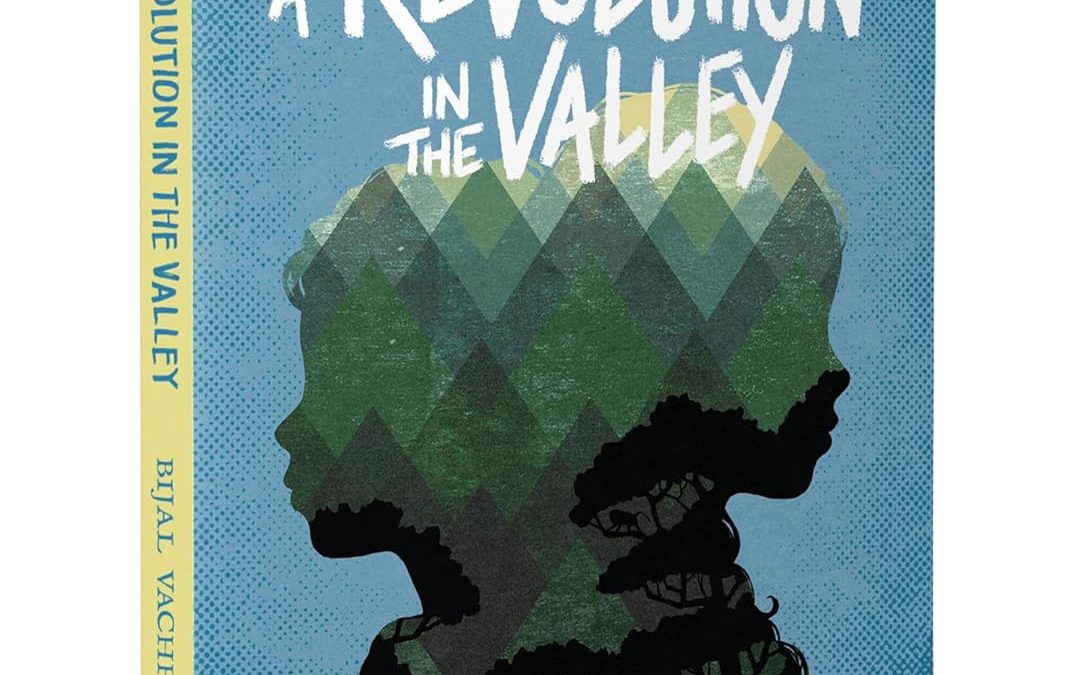
A Revolution in the Valley by Bijal Vachharajani
My take on the book:
Twelve year old Jenny’s world is the Silent Valley in Kerala, surrounded by dense, green forest filled with the calls of langurs and hornbills. She spends her days roaming the forest with her father and her scrappy local dog, in a life that feels timeless. Hundreds of miles away, in a Bombay that never quite sits still, Teesta is a girl with a different kind of restlessness; an aspiring journalist trying to find her own voice amid the noise of the city. When a school pen-pal programme pairs the two of them, their letters start out as simple exchanges: forest versus city, quiet versus chaos, two lives that seem to have almost nothing in common.
That changes fast when a massive hydroelectric project threatens to drown a huge stretch of Jenny’s Silent Valley, and around the same time, Teesta starts watching Bombay’s mangroves sbeing dumped with concrete waste from nearby constrution sites. What began as pen-pal small talk turns into something far more urgent, as both girls realise the places they love are under threat and that their letters have become a lifeline between two very different environmental battles. Jenny and Teesta come to see that geography doesn’t have to be a barrier when it comes to standing up for the planet, and the story follows them as they each find their footing. Jenny in the middle of a real, landmark fight to save Silent Valley, Teesta learning to use her growing voice as a journalist, while still being twelve-year-old girls navigating friendship, family, and the messiness of growing up.
This story is a heartwarming and highly educational coming-of-age novel that successfully brings a slice of Indian environmental history alive for young readers. The author structure of using letters between Jenny and Teesta is a wonderful narrative choice. It not only builds a bridge between rural Kerala and urban Bombay but also captures the sweet nostalgia of late-1970s letter writing, complete with the slow, eager anticipation of waiting for the postman to arrive.
The biggest strength of the book is its ability to break down a grand, complex historical movement like the Silent Valley protest (1973–1984) into the small, everyday choices of children. Rather than sounding like a serious academic book, the prose is lively and filled with humorous observations. By drawing parallels between the threat to a distant rainforest and the destruction of city mangroves, the author gently nudges readers to notice and protect the ecosystems right in their own backyards.
However, because the book is relatively short and splits its timeline between two main characters, readers who want a deeper dive into the specific flora and fauna of Silent Valley itself might feel the forest descriptions are slightly rushed. Additionally, some readers might find the transition between the two girl’s narratives a bit abrupt in the beginning chapters.
Even with these minor hiccups, the book is a highly inspiring read that shows how young voices can make a massive difference. The author’s research shines through clearly, and the historical note at the end is a great addition for curious minds.
Pick this up for a gentle, nostalgic, and inspiring read about the power of standing up for nature.
My rating:
4.5/5.