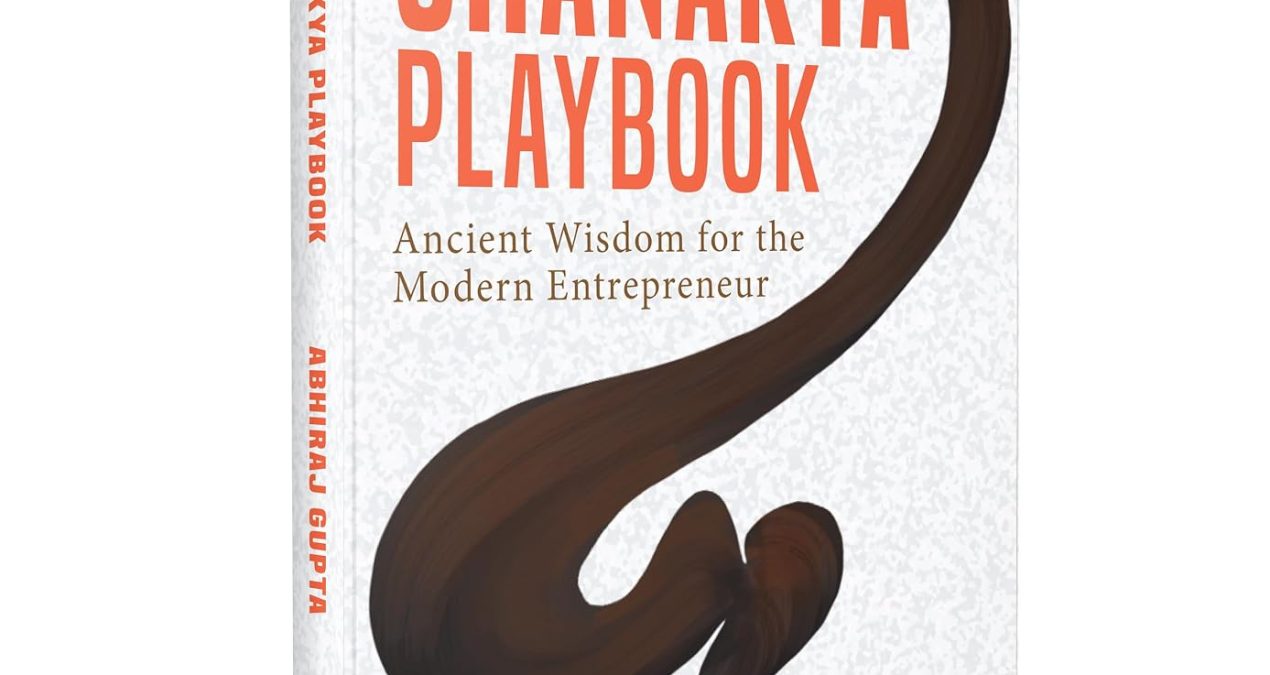
The Chanakya Playbook: Ancient Wisdom for the Modern Entrepreneur by Abhiraj Gupta
My take on the book:
The Chanakya playbook has a simple but bold premise — what if the ultimate playbook for building and running a business today was actually written over two thousand years ago. The author takes Chanakya’s Artha Shastra and reworks it into something today’s entrepreneurs and executives can actually pick up and use. The author analyses the Artha Shastra for frameworks and applies them directly to the messy and uncertain business of running an organization in 2026.
The book is built around the central idea that keeps resurfacing throughout: real, lasting success only comes when dharma (ethical responsibility) and Artha (material prosperity) are held in balance and not treated as opposing forces. The author structures everything into three pillars — internal mastery, structural resilience, and strategic agility.
Internal mastery is about the leader turning inward first: discipline, self-control, and decision-making before anything else. Structural resilience is about building organisations that can, as the book puts it through its tortoise analogy, contract when the environment turns hostile and expand when conditions favour growth. And strategic agility is where Chanakya’s ideas on intelligence-gathering, adaptability, and calculated action get translated into how a modern business should read its market and move through disruption.
While most business and leadership related books chase the quick hack or the viral framework, this book keeps circling back to patience, ethics, and long-term thinking, the kind of advice that does not promise a fast win but asks you to build something that is actually built to last.
The book is not for casual reading, it is dense and framework-heavy by design, and it demands real attention as the reader is meant to sit with each idea, reflect on it, and figure out how it actually applies to their own situation.
For entrepreneurs, founders, and anyone tired of leadership advice that does not outlast the next business cycle, this one is worth the slower, more deliberate read it demands.
My rating:
4/5.